Home Remodeling Mistakes: A Guide to Lasting Luxury

True luxury in a home exists not in the surface aesthetics of marble or brass, but in the silent, unwavering integrity of the structure itself. You likely recognize that a high-end renovation is a profound investment of both capital and emotion, yet the anxiety surrounding hidden structural failures or contractors who overpromise can often overshadow the excitement of the project. Understanding the specific home remodeling mistakes to avoid is essential for any homeowner who prioritizes long-term property value over fleeting design trends. It's the difference between a residence that looks beautiful for a single season and one that functions as a masterwork for decades.
We believe that a successful transformation requires a partnership rooted in transparency and technical precision. This guide offers a roadmap for navigating the complexities of luxury renovation, ensuring your project remains a source of pride rather than a logistical burden. You'll learn how to prioritize architectural integrity, adhere to the updated 2026 National Electrical Code requirements, and select high-efficiency doors and windows that enhance both performance and style. We will explore the critical intersections of bespoke design and structural durability, providing you with the foresight to achieve a stress-free outcome that reflects your refined taste and protects your investment.
Table of Contents
The Illusion of the 'Surface-First' Renovation
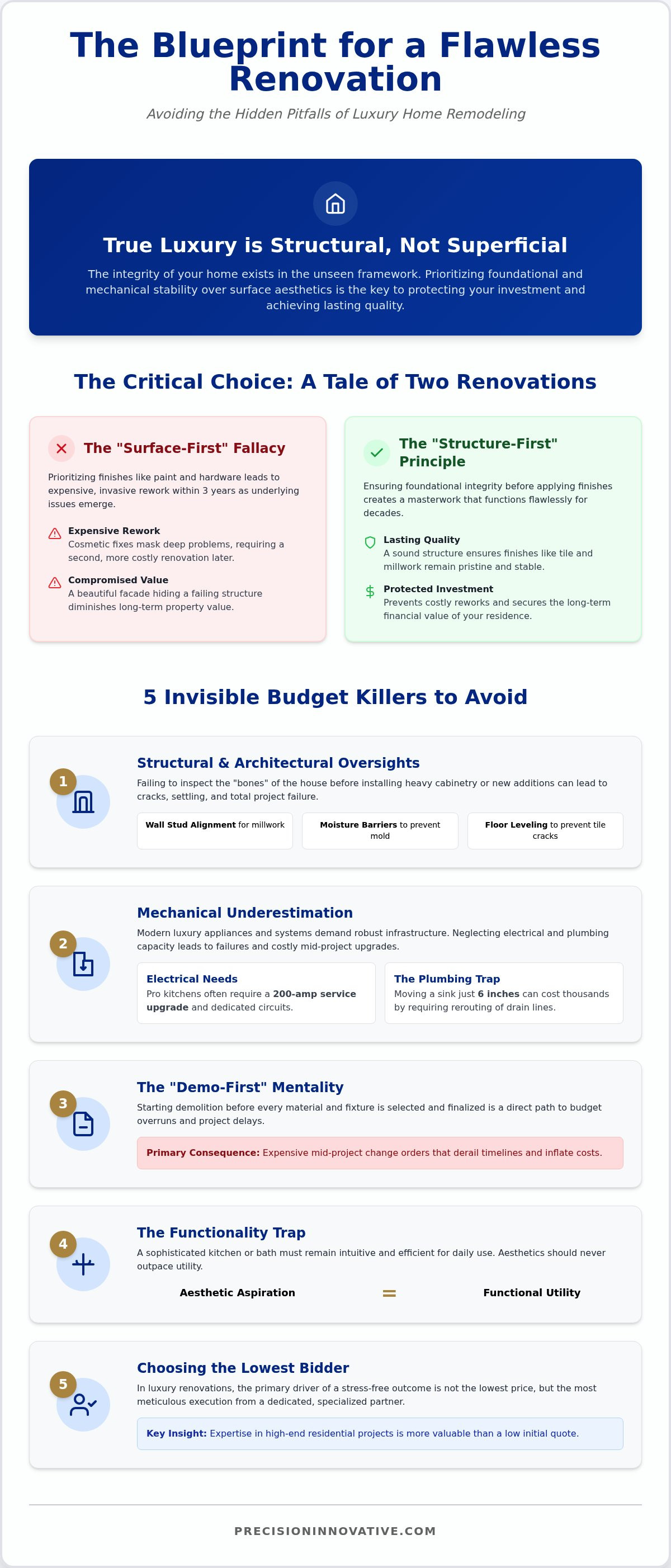
The allure of a "Pinterest-ready" home often blinds homeowners to the physical realities of their property. While high-end finishes provide immediate gratification, prioritizing surface beauty over foundational stability is a profound error. This "surface-first" mentality is one of the most common home remodeling mistakes to avoid. A cosmetic-only approach frequently results in expensive rework within three years. Underlying issues eventually force their way through expensive finishes, necessitating a second, more invasive project. It's often the case that a simple kitchen update reveals that a full-scale structural renovation is the only path to lasting quality. High-end property markets create a psychological trap of the "fast-fix," where speed is valued over the meticulous execution that a master craftsman provides. True luxury is a structural narrative, not just a veneer.
Myth: Paint and Hardware Solve Every Problem
Fresh paint and new hardware are transformative, but they aren't solutions for structural decay. A coat of premium home remodeling paint can temporarily mask underlying moisture intrusion or failing siding. Before installing heavy, custom cabinetry, a dedicated partner must inspect wall integrity to ensure the framing can support the load. Several invisible factors determine the longevity of your interior finishes:
Wall Stud Alignment: Ensuring vertical precision before mounting custom millwork.
Moisture Barriers: Verifying that exterior seals prevent interior mold growth.
Floor Leveling: Confirming the sub-floor is perfectly flat to prevent tile cracking.
Master craftsman quality starts with the framing, not just the backsplash. Precision starts behind the drywall, where the integrity of the home is actually established. With 25+ years of industry experience, we've seen how ignoring these invisible elements compromises the entire investment. Don't let a beautiful facade hide a failing structure.
The Cost of Ignoring Architectural Integrity
Architectural integrity ensures that home additions complement the original structure's load requirements and aesthetic language. Failing to account for these structural forces can lead to settling or foundation cracks that compromise the entire residence. High-efficiency doors and windows play a critical role in this balance. They maintain the thermal envelope. This protects the home's interior systems from environmental stress and ensures long-term energy efficiency. For those planning a project, consulting an essential resource for residential remodeling helps bridge the gap between vision and structural reality. Identifying these home remodeling mistakes to avoid early in the design phase ensures a transformation that lasts for decades.
Structural and Mechanical Oversights: The 'Invisible' Budget Killers
The true measure of a luxury renovation lies within the wall cavities and floor joists. While high-end cabinetry and designer lighting capture the eye, the mechanical systems of a home dictate its actual performance and longevity. One of the most significant home remodeling mistakes to avoid is underestimating the infrastructure required to support modern, professional-grade living. When these "invisible" elements are neglected, the financial consequences often manifest mid-project as emergency change orders that can derail even the most generous budgets. A meticulous approach ensures that every aesthetic choice is backed by a system capable of sustaining it.
The Electrical and Plumbing Infrastructure
Modern luxury demands an immense amount of power. A professional-grade kitchen often requires a 200-amp service upgrade and dedicated circuits for specialized appliances like steam ovens, induction cooktops, and high-capacity refrigeration. Without these dedicated lines, you risk frequent breaker trips and shortened appliance lifespans. Similarly, the "plumbing trap" is a reality for many homeowners; moving a bathroom sink just six inches can cost thousands if it necessitates rerouting established drain lines or vent stacks through load-bearing walls. Common plumbing venting errors in master suite additions can lead to persistent drainage issues and sewer gas intrusion, compromising the sanctuary you've worked to create. The invisible precision of your pipes and wires ultimately determines the longevity of your visible luxury.
HVAC and Thermal Performance
Maintaining a consistent climate across new and existing living spaces is a complex engineering task. Simply tapping into an existing HVAC system for a new home addition is a mistake that leads to uneven temperatures and premature equipment failure. Proper system sizing must account for the impact of high-efficiency window installations, which significantly alter the heating and cooling load of a room. Thermal bridging occurs when a conductive material creates a path for heat to bypass the insulation in a home's thermal envelope, resulting in cold spots and reduced energy efficiency. Partnering with a dedicated partner for your home remodeling project ensures these mechanical complexities are resolved before they become liabilities.
Exterior integrity is equally vital when planning interior expansions. Ignoring the condition of the roof and siding while focusing solely on the interior is a recipe for disaster. If the home's shell is compromised, moisture will eventually penetrate the new finishes, leading to mold and structural decay. A master craftsman understands that a home functions as a single, integrated machine. Identifying these home remodeling mistakes to avoid early in the planning phase protects both your property value and your peace of mind.
The Functionality Trap: Why Aesthetics Should Never Outpace Utility
A residence that inspires awe but fails to support daily life is a common byproduct of prioritizing form over function. Many homeowners fall into the trap of designing "trophy kitchens" that look spectacular in photographs but prove impossible to navigate during meal preparation. High-end design should enhance your lifestyle, not complicate it. One of the most pervasive home remodeling mistakes to avoid is the assumption that a beautiful material or a spacious layout automatically equates to a functional one. Without a foundation of ergonomic planning, even the most expensive renovation can become a source of daily frustration.
The "work triangle," representing the relationship between the sink, cooktop, and refrigerator, remains a cornerstone of efficient design, even in modern, open-concept living spaces. When islands become too large or are positioned incorrectly, they act as barriers rather than assets. Similarly, inadequate storage planning in master bathroom renovations often leads to cluttered countertops that detract from the intended spa-like atmosphere. A master craftsman understands that luxury is found in the ease of use, where every drawer, appliance, and fixture is exactly where it needs to be.
Ergonomics in High-End Design
Precision in spacing is what separates a professional renovation from a standard one. Clearance requirements for islands and appliances must be strictly followed; a minimum of 42 to 48 inches is often necessary to allow for multiple people to move freely. In the bathroom, zero-entry showers require meticulous sloping and specific spatial footprints to ensure water remains contained while providing seamless accessibility. Lighting is another area where functionality often falters. Relying solely on recessed "can" lights creates harsh shadows and lacks the nuance required for different times of day. A sophisticated lighting plan incorporates layers, including task, ambient, and accent, to provide both utility and mood. Ultimately, a successful whole home renovation requires a cohesive functional flow that connects every room through shared ergonomic standards.
Material Durability vs. Trendiness
Selecting materials based on current trends rather than their performance characteristics is a significant risk. High-traffic areas like flooring and countertops demand surfaces that can withstand daily residential use without losing their luster. Buying cheap materials for these critical zones often leads to premature wear, staining, or cracking. Beyond the interior, professional-grade siding and roofing are non-negotiable for maintaining exterior integrity. These elements protect your investment from the elements and ensure the longevity of your interior work. When planning bespoke outdoor living spaces, you must also evaluate long-term maintenance requirements. Beautiful natural wood decks or intricate stone features may require specialized care that, if neglected, can quickly compromise the aesthetic you've invested in. Identifying these home remodeling mistakes to avoid early ensures your home remains as durable as it is beautiful.
The Master Planning Framework: Avoiding the 'Demo-First' Mentality
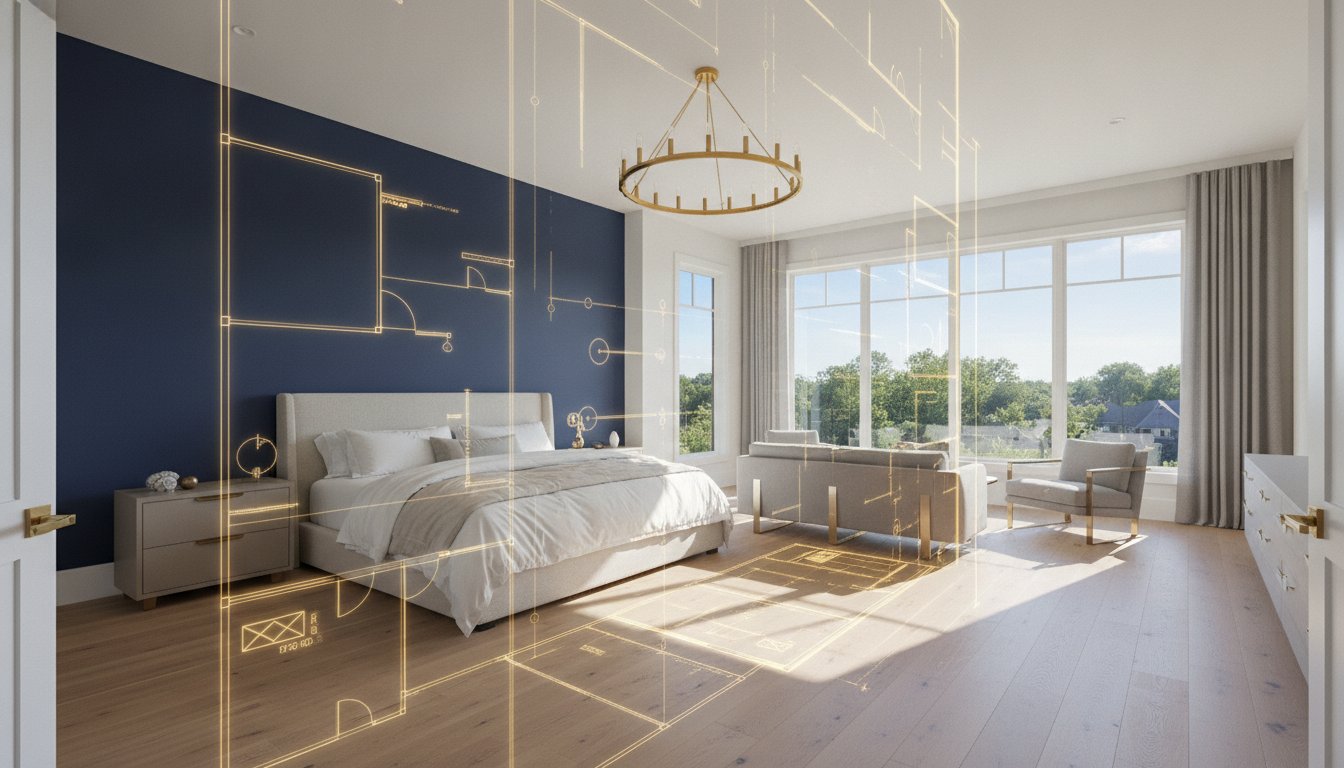
The impulse to swing a sledgehammer is often the first step toward a logistical and financial nightmare. In the world of high-end property transformation, the "demo-first" mentality is among the most destructive home remodeling mistakes to avoid. Meticulous planning must precede any physical disruption of the site to maintain the project's integrity. When demolition begins before every finish, fixture, and appliance is selected, the project loses its predictable rhythm. This lack of foresight leads to "change orders" mid-project, which are notorious for destroying both budgets and timelines. Professional design services act as a safeguard, ensuring that every architectural detail is resolved before the construction crew arrives. A truly comprehensive master plan also looks beyond the interior walls. It incorporates exterior property improvements like roofing, siding, and outdoor living spaces to ensure the entire residence evolves in harmony.
The Pre-Construction Checklist
The pre-construction phase is the most critical ROI driver for any sophisticated homeowner. During this period, the foundation for a stress-free transformation is laid through rigorous organization and clear communication. Securing all necessary building permits before construction begins is a non-negotiable requirement for legal and structural security. Finalizing the cabinetry and appliance layout is equally vital; it allows for precise plumbing and electrical rough-ins that match your bespoke selections exactly. You must also verify lead times for custom windows, doors, and flooring. In 2026, logistics for premium materials require advanced scheduling to prevent unnecessary delays that stall the momentum of your renovation.
Permit Procurement: Navigating local building codes to ensure full compliance.
Fixture Finalization: Choosing every handle, faucet, and hinge before the first hammer swings.
Lead Time Verification: Coordinating with suppliers for custom-milled wood or imported stone.
Logistics and Daily Life Management
Managing the reality of a construction site requires a partner who prioritizes your comfort and daily routine. A common mistake is failing to plan for a temporary kitchen or alternative living arrangements during major renovations. Master craftsmanship is inherently methodical and cannot be rushed without compromising the final result. Setting realistic timelines allows for the meticulous execution your investment deserves. If you are ready to begin this journey with a team that values precision, you can learn more about our process by connecting with a dedicated partner for your home remodeling. This level of preparation ensures that the final outcome functions as beautifully as it looks while protecting your peace of mind throughout the process.
Navigating the Partnership: Mistakes in Contractor Selection
The success of a high-end renovation depends entirely on the caliber of the team executing the vision. Perhaps the most perilous of all home remodeling mistakes to avoid is falling into the "lowest bid" trap. While a lower quote is initially appealing, it often signals a lack of comprehensive planning, insufficient insurance, or the use of unskilled labor. In the luxury sector, the cheapest quote frequently becomes the most expensive in the long run through hidden costs and the necessity for corrective work. Selecting a dedicated partner requires looking beyond the bottom line to evaluate a firm's history of precision and their ability to manage complex structural narratives.
A sophisticated homeowner must also assess the personality fit and communication style of a potential contractor. You're entering into a long-term partnership that requires mutual respect and absolute transparency. Modern project management requires modern tools; a lack of transparency in project management software is a significant red flag. You should expect real-time updates, clear scheduling, and organized documentation to ensure a stress-free transformation. Without these systems, even the most talented craftsman can struggle to maintain the order and predictability that a luxury project demands.
Vetting for Master Craftsmanship
Distinguishing between a general handyman and a dedicated residential remodeling firm is essential for protecting your property value. High-end additions and whole-home transformations require a deep understanding of structural engineering and architectural integrity. A master craftsman doesn't just follow a blueprint; they anticipate how new loads will affect an existing foundation and how modern mechanicals will integrate with traditional framing. To navigate this selection process with confidence, consult our guide on how to choose a remodeling contractor. This resource provides the criteria necessary to identify a firm that possesses both the technical skill and the professional demeanor your project requires.
The Value of a Dedicated Partner
A true partnership is built on the foundation of quiet confidence and industry expertise. With 25+ years of industry experience, we understand that our role as a dedicated partner is to absorb the complexities of the project so the homeowner doesn't have to. This "master craftsman" approach reduces stress by providing a single point of accountability and a commitment to meticulous execution. Integrity and mutual respect are not just values; they are the mechanisms that ensure a project stays on track and meets the highest standards of quality.
Technical Foresight: Identifying potential structural conflicts before they become budget-breaking issues.
Artisanal Execution: Ensuring every joint, seam, and finish meets a bespoke standard of excellence.
Comprehensive Finishing: Recognizing that professional interior and exterior painting is the definitive mark of a completed luxury project.
The final aesthetic touch, such as the precision of the exterior painting, serves as the ultimate assurance of quality. It reflects a thoroughness that extends from the initial framing to the final brushstroke. By avoiding common home remodeling mistakes to avoid in the selection phase, you ensure your residence becomes a lasting testament to refined taste and structural durability.
Securing the Future of Your High-End Residence
A successful renovation is an exercise in technical foresight and aesthetic restraint. You now understand that prioritizing foundational stability over surface finishes is the most effective way to protect your long-term property value. By adhering to a rigorous master planning framework and evaluating mechanical capacities early, you effectively eliminate the common home remodeling mistakes to avoid that often compromise luxury projects. True longevity is achieved only when meticulous execution meets a clear, functional vision.
Your home deserves a dedicated partner who values integrity as much as artistry. With 25+ years of master craftsmanship and a specialized residential focus, we bring comprehensive interior and exterior expertise to every whole-home transformation. We ensure that every architectural detail is resolved with precision, allowing you to enjoy a seamless transition from concept to completion. We take immense pride in the fine details that define a masterwork, ensuring your investment remains secure for decades to come.
Partner with Precision Innovative for a stress-free home transformation and begin the journey toward a residence that functions as beautifully as it looks. Your vision is within reach, and we're ready to help you realize it with confidence.
Frequently Asked Questions
What is the single most expensive remodeling mistake homeowners make?
The single most expensive error is often choosing a contractor based solely on the lowest price. This initial saving frequently evaporates when unskilled labor or poor materials necessitate a complete tear-out and reconstruction. In the luxury market, the cost of correcting structural failures or improper mechanical installations far outweighs the premium of hiring a master craftsman from the start. Prioritizing expertise over the bottom line is one of the most critical home remodeling mistakes to avoid.
How much should I realistically set aside for a renovation contingency fund?
You should realistically set aside a contingency fund equal to 20% of your total project budget. While many homeowners aim for a 10% buffer, high-end renovations often uncover hidden structural or mechanical complexities once the walls are opened. According to industry data from 2025, approximately 37% of homeowners exceeded their initial budgets. A robust contingency ensures that your project continues without financial strain or the need to compromise on the quality of your finishes.
Is it a mistake to remodel my home based on current design trends?
It is a mistake to prioritize temporary trends over timeless architectural integrity. While modern accents can refresh a space, the foundational elements of your home should remain classic to protect long-term property value. Integrating hyper-specific trends often leads to a dated aesthetic within a few years, necessitating further renovations. A dedicated partner helps you balance contemporary style with a bespoke design that remains sophisticated and relevant regardless of shifting market preferences.
Can I stay in my home during a whole-home renovation?
While you can physically remain in your home, it is rarely advisable during a comprehensive luxury renovation. The process involves significant dust, noise, and frequent interruptions to essential utilities like water and electricity. For a stress-free transformation, most homeowners find that temporary alternative living arrangements allow the construction team to work more efficiently. This separation also protects your daily peace of mind and allows the master craftsman to maintain a cleaner, more organized job site.
What happens if my contractor finds structural issues after demolition starts?
When structural issues are discovered mid-project, the first step is a professional assessment to determine the impact on your master plan. This discovery is why a pre-construction phase is so vital for risk mitigation. Your dedicated partner will provide a transparent update to the project scope and budget, drawing from your contingency fund to resolve the issue correctly. Addressing these hidden problems immediately ensures the long-term safety and structural durability of your residence.
How do I know if a home addition will actually increase my property value?
A home addition increases value when it adds functional square footage that meets current market demands. Adding a primary suite or an expanded kitchen typically offers a higher return than niche hobby rooms. You should also consider the impact of high-efficiency doors and windows on the home's performance. These upgrades enhance the thermal envelope and appeal to modern buyers who prioritize energy efficiency. Meticulous execution ensures the new space integrates seamlessly with the original architecture.
Is it necessary to hire an architect for a kitchen or bathroom remodel?
Hiring an architect is necessary when your project involves significant structural changes or complex additions that alter the home's footprint. For most kitchen or bathroom renovations, a specialized residential remodeling firm provides the necessary design and engineering expertise in-house. This integrated approach ensures that the aesthetic vision is always grounded in technical reality. If your project requires a permit for load-bearing wall removals, your contractor will coordinate the professional sign-offs required to ensure safety.
Why is professional siding and roofing considered part of a 'remodeling' plan?
Professional siding and roofing are essential components of a remodeling plan because they protect your interior investment. A beautiful interior renovation is vulnerable to mold and structural decay if the exterior shell is compromised. Maintaining the thermal envelope through high-quality exterior integrity ensures your new living spaces remain comfortable and energy-efficient. Identifying these home remodeling mistakes to avoid includes recognizing that the home functions as a single, integrated system where the exterior protects the luxury within.

Comments